
PIDP 3351 For Dr. Dwayne Harapnuik
The Learner’s Mindset
Vancouver Community College PIDP 3351 https://www.facebook.com/VCCSchoolOfInstructorEducation/
April 10 2025
33351 Post#Module 1
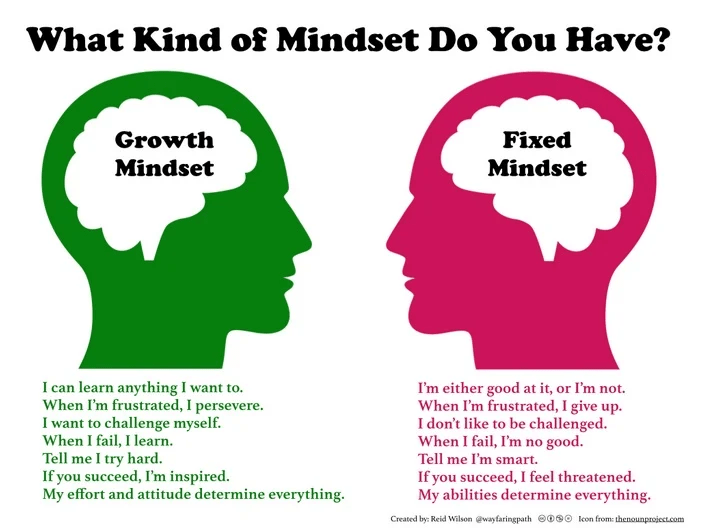
Are you a fixed or growth mindset individual and why is that important?
As seen from the infographic above, the Fixed Mindset individuals dislike challenges, are thwarted by frustration, lack self-esteem or are threatened by others’ success.
The Growth Mindset individuals however have a significantly different outlook; can learn anything, persevere through frustrations, are ready for challenges and are inspired by others success. They have a Learner’s mindset, but what is a Lerner’s Mindset and how does one cultivate it? The proceeding video by Dr. Dwayne Harapnuik explain the concepts involved.
How to Reignite your Learner’s Mindset.
Dwayne Harapnuik Revised July 1, 2021
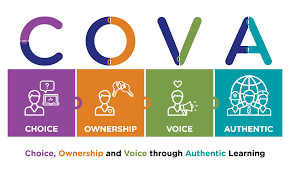
In this video DR. H, describes the steps required to change one mindset and the changes necessary to actualize the desired change. He introduces concepts like Reigniting your learners Mindset and COVA, Choice through Ownership and Voice through Authentic learning.
You would not be alone if you immediately think “I already have a growth mindset”. Many people believe that. But is that really the case and can you tell the difference? Please watch the next video and see if there really is a difference.
What Having a “Growth Mindset” Actually Means.
Dwayne Harapnuik — September 16, 2024.
3 Common Growth Mindset Misconceptions
- I already have a Growth Mindset
- A Growth Mindset is just about praising and rewarding effort
- Just espouse a Growth Mindset and good things will happen
This is perhaps why we need to consider moving to a Learner’s Mindset.
So, what do you think? Whatever your take-away is, I hope that it has been made abundantly clear what a Learner’s/ Growth mindset is and how important it is for your and my future development.
Adopt a Learner’s Mindset
The first step to learning anything you want is to believe you can learn it. This is a learner’s mindset, also known as a growth mindset. The idea is rooted in the concept of neuroplasticity, the brain’s ability to reformat its neural pathways, adapting to change throughout our lives.
In Mindset, psychologist Carol S. Dweck differentiates between a growth mindset and the more common fixed mindset, in which you believe your abilities are unchangeable and that you were born with a certain amount of intelligence. On the other hand, if you adopt a growth mindset, you view your innate abilities as a starting point on which you can build with hard work, persistence, and the right learning strategies.
When you have a fixed mindset, you believe (or were told) that you were born with specific traits and a certain, unchangeable amount of intelligence. Dweck and Boaler both assert that many of us are trained in this false mindset from an early age—for instance, by teachers who believe that intelligence, inherent talent, or differences based on gender and race determine everything.
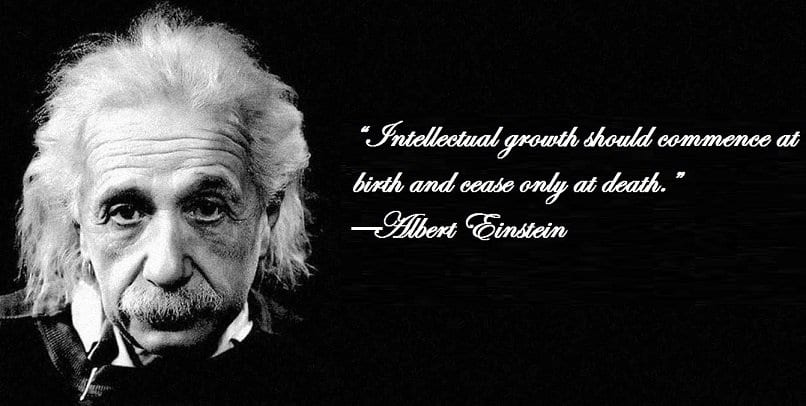
I will end the discussion by leaving you this thought by a now undisputed genius;

Assessment Of/For/As Learning
April 11 2025
3351 Post# Module 2
Welcome Back.
Today I want to share with you my process by which I plan to implement the Assessment Of/For/As Learning methodology.
First as a reminder let define Assessment Of/For/As Learning;
Assessment Of/For/As Learning
For those who prefer a more typical written definition the New South Wales (Australia) Education Standards Authority (2017) provide a good summary of “assessment for, as, and of learning”
Assessment of learning assists teachers in using evidence of student learning to assess achievement against outcomes and standards. Sometimes referred to as ‘summative assessment’, it usually occurs at defined key points during a teaching work or at the end of a unit, term or semester, and may be used to rank or grade students. The effectiveness of assessment of learning for grading or ranking purposes depends on the validity, reliability, and weighting placed on any one task. Its effectiveness as an opportunity for learning depends on the nature and quality of the feedback.
Assessment for learning involves teachers using evidence about students’ knowledge, understanding, and skills to inform their teaching. Sometimes referred to as ‘formative assessment’, it usually occurs throughout the teaching and learning process to clarify student learning and understanding.
Assessment as learning occurs when students are their own assessors. Students monitor their own learning, ask questions and use a range of strategies to decide what they know and can do, and how to use assessment for new learning.
Intent
Though my students are working professionals in technical trades and are there skewed to a more formative structure of assessment, I plan to shift to a AaL assessment process by making the class discussions, workshops and labs a significant part of the final assessment. The intent being if a learner does well in these areas, they can successfully complete the course even if their end of course test score is not that great.
Implementation- a Five Step Process.
Step 1. Understanding of Assessment Of/For/As Assessment
Using methods from Chappuis et al. (2011), I will provide a clear framework of AoL, AaL, and AfL. Using the resources and infographic at National Forum for the Enhancement of Teaching and Learning will help students grasp the significance of diverse assessment strategies.
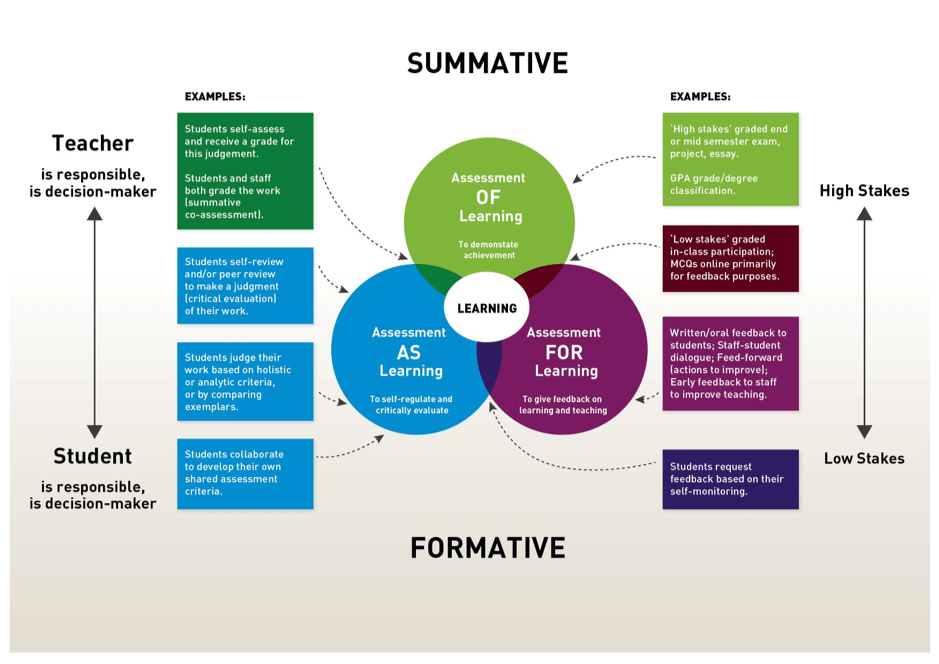
Step 2. Introduction to Key Features of Assessment Of/For/As Learning
The following assessment OF/FOR/AS learning table is a compilation of from a wide variety of resources that goes a bit further than simple definitions (Chappuis et al., 2012; Fenwick & Parsons, 2009; McNamee & Chen, 2005; Rowe, 2012; Schraw, 2001; Sparks, 1999):
| Assessment | Of Learning | For Learning | As Learning |
| Type | Summative | Formative | Formative |
| What | Teachers determine the progress or application of knowledge or skills against a standard. | Teachers and peers check progress and learning to help learners to determine how to improve. | Learner takes responsibility for their own learning and asks questions about their learning and the learning process and explores how to improve. |
| Who | Teacher | Teacher & Peers | Learner & Peers |
| How | Formal assessments used to collect evidence of student progress and may be used for achievement grading on grades. | Involves formal and informal assessment activities as part of learning and to inform the planning of future learning. | Learners use formal and informal feedback and self-assessment to help understand the next steps in learning. |
| When | Periodic report | Ongoing feedback | Continual reflection |
| Why | Ranking and reporting | Improve learning | Deeper learning and learning how to learn |
| Emphasis | Scoring, grades, and competition | Feedback, support, and collaboration | Collaboration, reflection, and self-evaluation |
If we want to encourage our learners to become more autodidactic it would then seem reasonable to shift from assessment of learning to assessment for learning and ultimately get to assessment as learning. We see this perspective from Lorna Earl (2012) in her highly cited text Assessment as Learning: Using Classroom Assessment to Maximise Student Learning.
Step 3. Putting AfL/AoL/AaL into Action-Planting the seeds of the Growth Mindset
Through class projects, workshops and group assignments. I will monitor my learners’ progress and guide them to reflect on their learning and develop their self-assessment skills. This process aligns with Fenwick and Parsons’ (2009) approach to evaluation and reflection.
Step 4. Cultivating an Appreciation for Assessment Mindset
As discussed by McNamee and Chen (2005), I will demonstrate how the integration of assessment and teaching bridges the gap between understanding and application. Learners will witness the practical implications of their acquired knowledge. When my learners begin to see the positive benefits of Choice Ownership and Voice then they will truly make the learning process their own and like Dr. H said, you won’t be able to take it away from them. Please see Dr. Harapnuik’s video below for more info;
Step 5. Timely Personalized and Positive Feedback
Regular timely, positive and constructive feedback will demonstrate to my learners that I take ownership of the process. Working within their expectation and appreciation by providing learners with individualized feedback, encouraging them by making the assessment clear, concise and making use of Yet where possible. (Sparks, 1999/Dwek. Carol 2016).
Resources
All resources can be found here. In addition to these articles, any references related to citations in the blog should be found here.
References
1. Brookfield, Stephen. (2015). The Skillful Teacher. San Francisco, CA. Jossey-Bass, a Wiley Imprint. www.josseybass.com
2. Sullivan, G.M., Artino, A.R. (2013). Analyzing and Interpreting Data from Likert-type Scale. Retrieved May 3, 2017 https://www.ncbi.nlm.nih.gov/pmc/articles/PMC3886444/
3. Harapunik, Dwayne. (2021) It’s About Learning, Reignite Your Learner’s Mindset. https://www.harapnuik.org/?page_id=9069
4. Harapunik, Dwayne. (September 16, 2024) Its About Learning, what having “Growth Mindset” actually means. https://www.harapnuik.org/?p=9632
5. Larry Ferlazzo | Apr 21, 2016, | The Best Resources On Helping Our


 Adult Learning Innovations
Please critique at will.